Almost any AI website builder can turn a short business description into a homepage. The real test comes later, when you need to restructure a section, update your branding, or add another page that feels like it belongs on the same website.
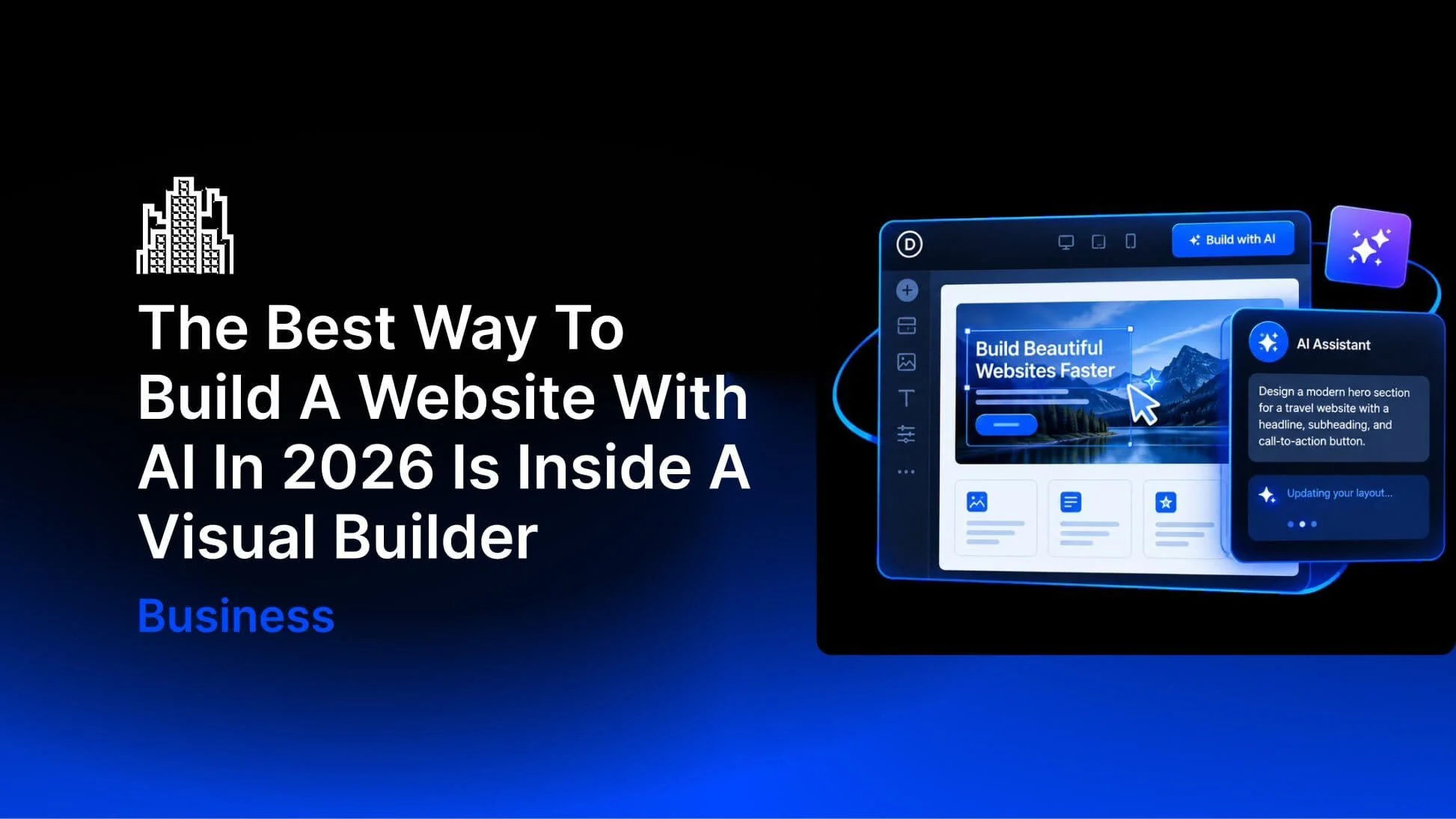
In 2026, AI website-building tools generally take three different approaches. Some create websites hosted on their own platforms. Others generate a codebase you can develop and deploy. And a third category builds directly inside a visual editor, giving you a website you can continue working on without relying on AI for every change.
Each approach has its advantages, but for businesses that want a website they can comfortably manage and grow, a visual builder with an integrated AI agent makes a compelling case. Let’s explore why, where tools like Divi 5 fit in, and what matters when choosing the right foundation for your website.
A Prompt Is Not a Website
A prompt is just a request. What happens after you submit it depends entirely on the tool you’re using.
Two AI builders might produce remarkably similar homepages from the same description, but what you get behind the scenes can be very different. One gives you a website tied to its hosting platform, another generates a software project, and a third creates editable elements inside a visual builder.
That distinction matters more than you might think, especially when it’s time to make changes.